
Pickleball is a fun and exciting sport that has been gaining popularity worldwide in recent years. Its simple rules, versatility, and suitability for all ages make it an ideal pastime for people looking to stay active and socialise. In this article, we will introduce you to the fascinating world of pickleball, its history, and its growing appeal in the United Kingdom. Whether you’re an experienced athlete or just looking for a new way to stay fit, pickleball is a game that can be enjoyed by anyone, regardless of their background or ability level.
A brief history of Pickleball
Origins in the United States
Pickleball was invented in 1965 on Bainbridge Island, Washington, by three friends, Joel Pritchard, Bill Bell, and Barney McCallum. The game was initially created as a fun and engaging activity for their families during the summer. It quickly caught on, and by the 1970s, pickleball had spread across the United States, with enthusiasts starting to organise tournaments and formalise the rules.
The main pickleball organisation in the United States is USA Pickleball. Formerly known as the United States of America Pickleball Association (USAPA), it was established in 2005 to promote the growth and development of the sport in the US.
Spread to the UK and Europe
Pickleball crossed the Atlantic Ocean to the UK in the early 2010s, and it has been growing in popularity ever since. The UK has seen a surge in interest in the sport, with new clubs, courts, and tournaments emerging across the country. As a result, the UK Pickleball Association was established to promote the game and support its development within the UK.
Appeal of Pickleball to a UK audience
Combines elements of tennis, badminton, and table tennis
Pickleball is often described as a combination of tennis, badminton, and table tennis. Played on a smaller court than tennis, with a low net and a perforated plastic ball, the game requires players to use a solid paddle to hit the ball back and forth over the net. This unique blend of elements from other popular racket sports makes pickleball appealing to a wide range of players, from seasoned athletes to complete beginners.
Suitable for all ages and fitness levels
One of the most significant advantages of pickleball is its accessibility. The smaller court size and slower ball speed make it easier for people of all ages and fitness levels to enjoy the game. Whether you’re an active senior looking to maintain your mobility or a young person wanting to try a new sport, pickleball offers a fun and engaging way to stay active.
Growing popularity in the UK
With more and more people discovering the joy of pickleball, the sport has seen a substantial increase in popularity in the UK. This growth has led to the development of new facilities, clubs, and tournaments, making it even easier for newcomers to get involved and learn the game. As the UK pickleball community continues to grow, there has never been a better time to give this exciting sport a try.
Equipment
A well-rounded introduction to pickleball wouldn’t be complete without talking about the essential equipment needed to play the game. In this section, we provide you with a comprehensive overview of the basic gear needed for pickleball, helping you be a bit more informed about the decisions to make when purchasing or renting your equipment.
The pickleball paddle
Materials and specifications
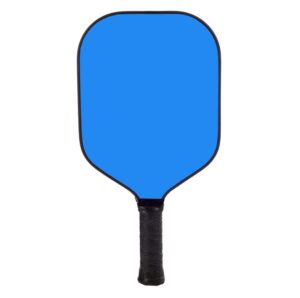
Pickleball paddles are generally made from a variety of materials, including wood, composite, and graphite. Wooden paddles are the most affordable option, but they tend to be heavier and less durable. Composite paddles, made from a combination of materials such as fiberglass and polymer, offer a good balance of weight, durability, and cost. Graphite paddles, often considered the highest quality option, are lightweight, strong, and provide excellent performance. When choosing a paddle, it’s worth considering other factors such as weight, grip size, and shape to find the one that best suits your needs and preferences.
How to choose the right paddle
Selecting the right pickleball paddle depends on your skill level, playing style, and personal preferences. Beginners may want to start with a more affordable option, like a wooden or composite paddle, before investing in a higher-quality graphite paddle. As you progress in the sport, you can experiment with different paddle weights and grip sizes to find the one that best complements your playing style.
The pickleball ball

Outdoor vs. indoor balls
Pickleball balls are designed specifically for either outdoor or indoor play. Outdoor balls are generally made from harder plastic and have smaller holes, allowing them to better withstand wind and other weather conditions. Indoor balls are softer and have larger holes, making them more suitable for use on smooth indoor court surfaces. Be sure to choose the appropriate ball for your playing environment.
Recommended brands
Some popular pickleball ball brands include Onix, Franklin Sports, and Dura. When purchasing balls, consider factors such as durability, bounce, and visibility. It’s also a good idea to have a few spare balls on hand, as they can wear out or become damaged over time.
Court and net

Court dimensions and markings
A standard pickleball court measures 20 feet wide by 44 feet long, making it smaller than a tennis court. The court is divided into two equal sections by a net, with additional lines marking the non-volley zone (also known as the “kitchen”) and service areas. While a dedicated pickleball court is ideal, it’s also possible to use existing tennis or badminton courts with some temporary modifications.
Net height and specifications
The pickleball net should be 36 inches high at the sidelines and 34 inches high at the center. Nets specifically designed for pickleball are available, but you can also use a standard tennis net and adjust the height accordingly.
Appropriate footwear and clothing
When playing pickleball, it’s important to wear comfortable, supportive athletic shoes that provide good traction on the court. Court shoes designed for tennis or badminton are suitable, but running shoes should be avoided due to their lack of lateral support. Additionally, wear moisture-wicking, breathable clothing that allows for unrestricted movement during play.
Rules of the Game
Understanding the basic rules of pickleball is essential for beginners looking to enjoy the sport. In this section, we will cover the fundamental rules, as well as some key differences between singles and doubles play.
Core basic rules
Scoring system
Pickleball uses a rally scoring system, meaning that a point can be scored by either the serving or receiving team. Games are played to 11 points, with players required to win by a margin of at least two points. In doubles play, each player on a team serves before the serve moves to the opposing team.
Serving and receiving
The server must serve underhand, making contact with the ball below the waist and with both feet behind the baseline. The serve must be hit diagonally across the court, landing in the opponent’s service area. The receiving team must let the ball bounce once before returning the serve, and the serving team must also let the ball bounce once before returning the shot. This two-bounce rule helps to initiate rallies and is a unique aspect of pickleball.
The non-volley zone (kitchen)
The non-volley zone, commonly referred to as the “kitchen,” is a 7-foot by 20-foot area on both sides of the net. Players are not allowed to hit the ball out of the air (volley) while standing in the kitchen, unless the ball has already bounced in the kitchen. This rule helps to prevent aggressive play at the net and encourages a more strategic approach to the game.
Doubles play
Positioning and strategy
In doubles play, teamwork and communication are crucial for success. Partners should work together to cover the court, with one player typically responsible for covering the left side and the other the right side. Effective communication can help avoid confusion and ensure that both players are prepared for each shot. Additionally, understanding when to be aggressive at the net and when to focus on consistent play can be the key to winning points in doubles.
Common mistakes to avoid
New players often make several common mistakes in doubles play, such as bunching together in the center of the court or failing to communicate effectively. By working on proper court positioning and communication, you can avoid these mistakes and improve your doubles game.
Singles play
Differences from doubles play
Singles play in pickleball involves some key differences from doubles play. With only one player on each side of the court, singles players must cover more ground and rely on their own skills and strategy to win points. The serve and scoring system remain the same, but the overall pace of the game is typically faster in singles play.
Singles strategy and tips
In singles play, focus on consistency and placement, rather than power. By keeping your opponent moving and off-balance, you can create opportunities to hit winning shots. Developing a strong serve and return game, as well as working on your footwork and court coverage, can help improve your singles play and overall pickleball skills.
Techniques and Strategies
To become a proficient pickleball player, it’s essential to learn the fundamental techniques and strategies of the game. In this section, we introduce you to the basic strokes, serve and return strategies, court positioning, and communication skills needed to succeed in pickleball.
Basic strokes
Forehand
The forehand is one of the most common strokes in pickleball. It involves swinging the paddle forward with the dominant hand, making contact with the ball on the side of the body where the palm faces forward. Focus on generating power from your hips and core while keeping a relaxed grip on the paddle.
Backhand
The backhand stroke is performed on the opposite side of the body from the forehand. With the back of your dominant hand facing forward, swing the paddle across your body, making contact with the ball. Proper footwork and rotation of the hips and shoulders are essential for generating power and accuracy in the backhand.
Overhead smash
The overhead smash is an aggressive shot used to put away high, weak shots from your opponent. When executing an overhead smash, position yourself under the ball and swing the paddle downward with force, aiming for an open area on the court or away from your opponent.
Drop shots and dinks
Drop shots and dinks are soft, finesse shots that are designed to land close to the net in your opponent’s non-volley zone (kitchen). These shots require precise touch and placement, and they can be highly effective in disrupting your opponent’s rhythm and drawing them out of position.
Serve and return strategies
Developing a consistent, well-placed serve is crucial in pickleball. Aim for deep, accurate serves that force your opponent to move, making it difficult for them to return the ball aggressively. When returning serve, focus on hitting deep returns that give you time to approach the net and establish a strong position on the court.
Court positioning and movement
Proper court positioning and movement are essential to playing successful pickleball. In general, players should aim to maintain a position near the centre of their side of the court, allowing them to reach shots on either side with minimal movement. Additionally, moving forward to the net whenever possible can help apply pressure on your opponents and create opportunities for winning points.
Communication in doubles play
Effective communication is vital in doubles play, as it helps to ensure that both players are prepared for each shot and reduces the likelihood of confusion or errors. Establishing clear verbal and non-verbal communication signals with your partner can greatly improve your doubles game and overall teamwork on the court.
Mental aspects of the game
Like any sport, pickleball requires mental focus and resilience. Learning to stay calm under pressure, develop a strategic mindset, and adapt to your opponent’s playing style are all crucial elements of success in pickleball. Practicing mindfulness and visualisation techniques can help improve your mental game and overall performance on the court.